


.jpg)

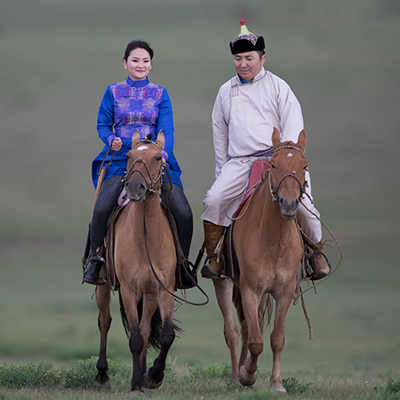
Mongolian Nomads
Nomadic pastoralism has been the foundation of Mongolian life for centuries. Even today, many families continue to move seasonally across the steppe, raising livestock and preserving traditions that have been passed down through generations.
The Mongolian nomadic lifestyle is closely connected to nature. Herders move their animals in search of fresh pasture and water, adapting to changing weather conditions throughout the year. Horses, sheep, goats, cattle, yaks, and camels remain essential to both the economy and daily life of rural communities.
The traditional dwelling of Mongolian nomads is the ger, a portable round tent designed to withstand the country's harsh climate. Easy to assemble and transport, the ger reflects the mobility and practicality that characterize life on the steppe.
Family and community play a central role in nomadic culture. Hospitality is highly valued, and visitors are often welcomed with milk tea, dairy products, and traditional foods. Seasonal celebrations, horse racing, wrestling, and music continue to strengthen cultural ties across generations.
Although modernization has brought significant changes to Mongolia, nomadic herding remains one of the most distinctive aspects of the country's identity. For many visitors, meeting herding families and experiencing life on the steppe offers a unique insight into one of the world's last surviving nomadic cultures.


