


.jpg)


Mongolian Tomb of the Silver Dragons- Top 10 Archaeological Discoveries of 2019
Archeology is a fascinating science. The more it discovers the more mysteries it unfolds. In the last centuries a large collection of important archeological findings which played vital role in human’s history have discovered from Mongolia. Besides visiting museums, one of the best ways to learn about local history and culture while travelling in Mongolia is by exploring the archaeological sites.
2019 is ending, but the year witnessed several major archaeological discoveries in Mongolia which one of them is selected as TOP 10 DISCOVERIES OF 2019 by Archaeology Magazine of Archaeological Institute of America.
The Best archaeological discoveries are those which challenge our ideas of human history, reveal new secrets all together, and above all capture the imagination.
The Tombs of Xiongnu aristocrats in Central Mongolia
The Mongolian team from Ulaanbaatar University and the Henan Provincial Institute of Cultural Heritage and Archaeology working at the tombs of Xiongnu or Hun State aristocrats, valley of Balgas, Khanui bag, Undur-ulaan soum, Arkhangai province announced that they finally completed the excavation of 400 tombs after 3 years.


Photo provided by the archaeological team
Tomb of Gilded Silver Dragons
In tomb numbered M189, one of 400 tombs, the team found fascinating finely-carved pair of gilded silver dragons were unearthed. Xiongnu or Hun state territory covered a vast area from Lake Baikal to Chita in the north, the whole of present-day Mongolia, and as far south as the Yellow River and Ordos in China organized defenses against the marauding nomads, developing their cavalry and building fortifications.


Photo provided by the archaeological team
Among a trove of gold, silver, bronze, jade and wood artifacts, two gilded silver dragons attracted the eyes of all researchers and archaeologists not only on location, but also around the world.

Photo provided by the archaeological team
The dragons, each 8 cm in length and with a gesture looking back to its vertical tail, details of the dragons' horns, eyes, teeth and feathers were exquisitely carved. Experts suspect they were ornaments attached to a decorative vessel.
Dragons in Mongolian History
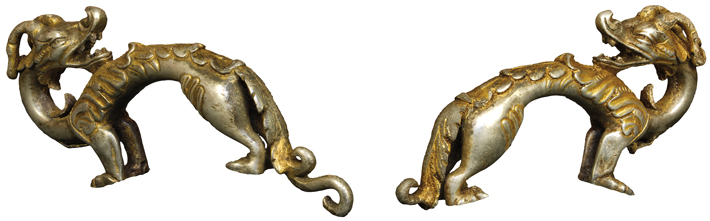 Many of us think that dragons are often described as legendary creatures in Chinese mythology. However, there are some Mongolian folktales including dragons and even see it in Mongolian Calendar as Year of the Dragon.
Dragons often appear in Mongolian Buddhist art, myths and scriptures, sometimes protective deities ride dragons.
A team of Chinese archaeologists who took part in a joint excavation in Mongolia, was shocked to find two gilded silver dragons among artefacts in Mongolia.
When you think about archaeology, archaeology is the only field that allows us to tell the story of 99 percent of our history.
The first to be in a Xiongnu Tomb
The team recovered part of a jade-decorated sword from this grave which is considered as the first to be found in a Xiongnu tomb. Archaeologists have also unearthed two lavish tombs built for nobles of the Xiongnu Empire. The smaller tomb contained the remains of a man buried with a horse-drawn carriage, 15 horse heads, and 19 silver equestrian ornaments, each depicting a unicorn deity.
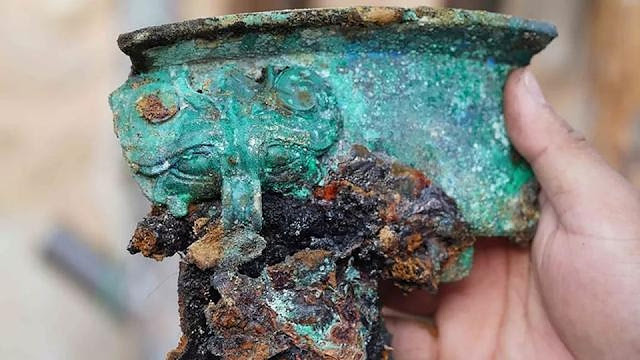


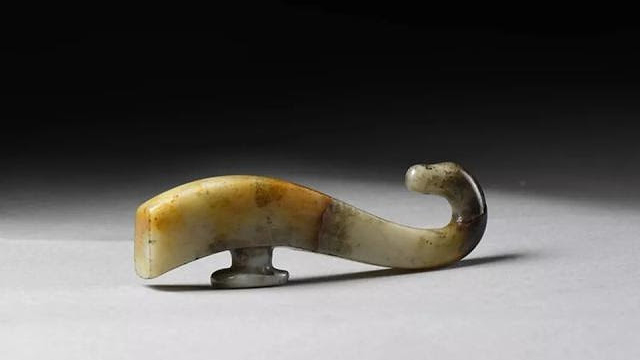
Photo provided by the archaeological team
A jade belt hook, wooden cups, a leather horse harness, chariots, weapons, and household utensils were also recovered from the tomb. Chinese archaeologists said the two gilded silver dragons not only testify to the cultural exchange and interaction between the prairie in the north and central China, but also indicate that the owner of the tomb had a high status in Mongol society.

Mongolia is rich with archaeological sites that can be discovered while travelling in Mongolia. Such discoveries are also a great chance to see the centuries of old objects and we invite you to visit Mongolian archaeological wonders to gain insight into ancient civilizations and fire up your imagination about Mongolia.
Archeology holds all the keys to understanding who we are and
where we come from.
Visit Mongolian Photos


Latest Blogs


Most Read Blogs
Useful Travel Tips
Blog Archive
Related Tours


